Allah says in Surah Al-Baqarah 2:2:
“This is the Book (Al-Quran) about which there is no doubt, a guidance for those who have Taqwa (fear of Allah and abstain from all kinds of sins and evil deeds which He has forbidden and love Allah much and perform all kinds of good deeds which He has ordained).”
In order to attain Taqwa, one need to be guided first by Allah. Guidance is in the Hands of Allah alone and nobody else has any share in that as Allah says in Surah Al-Qasas 28:56:
“Verily, you [O Muhammad ﷺ (may Allah send Blessings and Peace upon him)] guide not whom you like, but Allah guides whom He wills. And He knows best those who are the guided.”
Allah also says in Surah Al-Baqarah 2:272:
“Not upon you (O Muhammad ﷺ) is their guidance, but Allah guides whom He wills.”
One may ponder, “How is this life a test if Allah guides whom He wills?” Islam is the religion of the natural state of man (Fitrah), the religion of reason and thought. Allah has created man and then gave him the ability to reason. He has sent to him Messengers to call him to the truth and warn him against falsehood. Then He has left him to make his own choice whether to believe or disbelieve. Allah says:
“And say, ‘The truth is from your Lord.’ Then whosoever wills, let him believe; and whosoever wills, let him disbelieve.” [Surah Al-Kahf 18:29]
Prophet Muhammad ﷺ was sent with Al-Quran so as to convey the truth to all of mankind. If a person obeys, he benefits himself, and if he disobeys, he harms himself, as Allah says:
“Say, ‘O you mankind! Now has come to you the truth (Al-Quran and Prophet Muhammad ﷺ) from your Lord. So whosoever is guided, then he is guided for (the good of) his own self; and whosoever goes astray, then he does so to his own loss; and I am not (set) over you as a Wakeel (disposer of affairs to oblige you for guidance).’” [Surah Yunus 10:108]
Note that the verse says: “…for (the good of) his own self.” This alludes to someone who has the iniative to do something for his own good. What can we do in order to receive guidance from Allah? The answer is making sincere du‘a (supplication) to Allah. Ask Allah for guidance not only to the truth but also guidance in all aspect of our lives. Most importantly, ask Allah to guide us to attain true Taqwa.
There are two du‘as we can put into practice to gain Taqwa that Prophet Muhammad ﷺ used to supplicate with. The du‘as are as follows:
(1)

اللَٰهُمَّ إِنِّي أَسْأَلُكَ الْهُدَى وَالتُّقَى وَالْعَفَافَ وَالْغِنَى
ALLAAHUMMA INNII AS-ALUKALHUDAA WATTUQAA WAL’AFAAFA WALGHINAA
Meaning:
O Allah, I ask You for guidance, Taqwa, chastity (purity from sins) and self-sufficiency. [Sahih Muslim (2721) and Jami’ at-Tirmidhi (3489)]
(2)
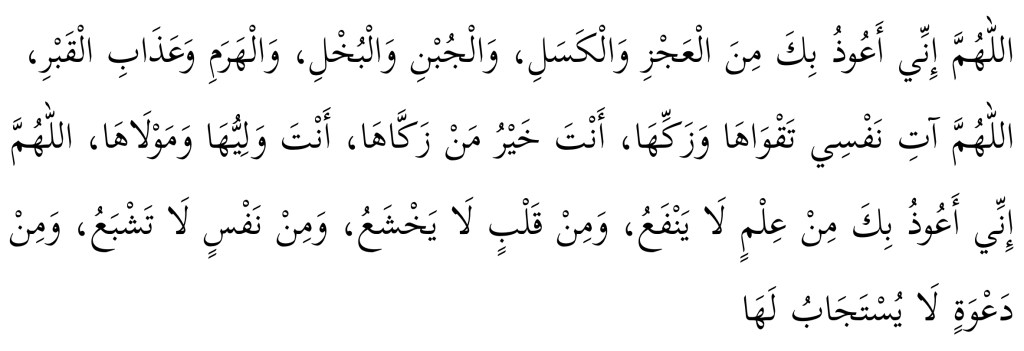
اللّٰهُمَّ إِنِّي أَعُوذُ بِكَ مِنَ الْعَجْزِ وَالْكَسَلِ، وَالْجُبْنِ وَالْبُخْلِ، وَالْهَرَمِ وَعَذَابِ الْقَبْرِ، اللّٰهُمَّ آتِ نَفْسِي تَقْوَاهَا وَزَكِّهَا، أَنْتَ خَيْرُ مَنْ زَكَّاهَا، أَنْتَ وَلِيُّهَا وَمَوْلَاهَا، اللّٰهُمَّ إِنِّي أَعُوذُ بِكَ مِنْ عِلْمٍ لَا يَنْفَعُ، وَمِنْ قَلْبٍ لَا يَخْشَعُ، وَمِنْ نَفْسٍ لَا تَشْبَعُ، وَمِنْ دَعْوَةٍ لَا يُسْتَجَابُ لَهَا
ALLAAHUMMA INNII A’UUDZU BIKA MINAL ‘AJZI WAL KASALI WAL JUBNI WAL BUKHLI WAL HARAMI WA’ADZAABIL QABR, ALLAAHUMMA AATI NAFSII TAQWAAHAA WA ZAKKIHAA ANTA KHOIRU MAN ZAKKAAHAA, ANTA WALIYYUHAA WA MAULAAHAA, ALLAAHUMMA INNII A’UUDZU BIKA MIN ‘ILMIN LAA YANFA’, WA MIN QALBIN LAA YAKHSYA’, WA MIN NAFSIN LAA TASHBA’, WA MIN DA’WATIN LAA YUSTAJAABU LAHA.
Meaning:
O Allah, I seek refuge with You from inabilily, laziness, cowardice, miserliness, decrepitude (senility at old age) and the punishment of the grave. O Allah, grant my soul its Taqwa and purify it. You are the best of those who can purify it. You are its Wali (Guardian) and its Maula (Master). O Allah, I seek refuge with You from knowledge that is not beneficial, a heart that is not humble, a soul that is never satisfied and a supplication that is not answered. [Sahih Muslim (2722)]
Allah never rejects a servant’s du‘a when he asks for guidance. If guidance comes to us, follow it. Do not be heedless of it. If we follow the guidance from Allah, Allah will increase us in guidance and grant us our Taqwa. Allah says in Surah Muhammad 47:17:
“And those who accept guidance, He increases them in guidance and gives them their Taqwa.”
For those who are heedless of Allah’s guidance; those who have hearts but do not want to contemplate the Signs of Allah; those who have eyes but do not want to see the proofs of Allah in His creation; and those who have ears but do not want to hear the teachings of Islam; their abode will be the Hellfire. Allah says:
“And surely, We have created many of the jinns and mankind for Hell. They have hearts wherewith they understand not, and they have eyes wherewith they see not, and they have ears wherewith they hear not (the truth). They are like cattle, rather they are more astray. They are the heedless ones.” [Surah Al-‘Araf 7:179]
Contemplating and pondering on the creation of Allah is one of the traits of those who have Taqwa. Allah says in Surah Yunus 10:6:
“Verily, in the alternation of the night and the day and in all that Allah has created in the heavens and the earth are Ayat (proofs, evidences, verses, lessons, signs, revelations, etc.) for those people who have Taqwa.”
Allah also says in Surah Ali ‘Imran 3:190-191:
“Indeed, in the creation of the heavens and the earth, and the alternation of night and day, are signs for people of understanding. (That is) those who remember Allah standing, sitting, and lying on their sides, and they contemplate upon the creation of the heavens and the earth (while saying): ‘Our Lord! You did not create (all) this in vain. Glory be to You, so protect us from the punishment of the Fire.’”
Take time to contemplate and ponder on Allah’s creation because through this activity, we can deepen our understanding and connection with Allah. It can also increase our awareness of Allah’s greatness, strengthen our faith and help us gain true Taqwa.
Taqwa does not mean that one is free from sin. Taqwa is a practice of avoiding sins and disobedience towards Allah as much as possible, and it is not a sign of perfection. Allah says:
“So have Taqwa of Allah as much as you are able.” [Surah At-Taghabun 64:16]
Those who have Taqwa can still fall into sin, but they will hasten to repent and seek forgiveness from Allah. Allah says in Surah Ali ‘Imran 3:135, regarding those who have Taqwa but they slip into sin:
“And those who, when they commit an immorality or wrong themselves (by transgression), remember Allah and ask forgiveness for their sins. And who can forgive sins except Allah? And they do not persist in what they have done while they know.”
These are just a few traits of a person who has Taqwa. There are more characteristics of such a person in Al-Quran for us to learn and take as a model. We can only possess these characteristics if we follow the guidance of Allah. Therefore, do not be heedless of Allah’s guidance if we want to attain true Taqwa. Supplicate to Allah often and implement the teachings of Al-Quran and As-Sunnah of Prophet Muhammad ﷺ. Only then, InsyaAllah, we will enter Paradise. Allah says:
“Verily, for those who have attained Taqwa are Gardens of Delight (Paradise) with their Lord.” [Surah Al-Qalam 68:34]
I conclude with a hadith of Jami’ at-Tirmidhi (2004) whereby Prophet Muhammad ﷺ was asked about that for which people are admitted into Paradise the most, so he said:
“Taqwa of Allah and good character.”
And he was asked about that for which people are admitted into the Fire the most, and he said:
“The mouth and the private parts.”

 Understand Islam The Way Of The Salaf
Leave a comment