As someone who claims to believe in the Oneness of Allah, we must base our understanding of the teachings of Islam upon the evidences contained within the Qur’an and the Sunnah. Is it not reasonable for us to believe that Allah has already manifested proofs of His existence and that we should strive to seek them? Allah is not in the slightest unjust by leaving His servants searching for evidence of His existence or wondering about His legislation that was revealed to His Messenger, Muhammad ﷺ. Knowledge regarding His existence and His legislation has already been made available in the form of books that have been preserved for centuries for us to study. With the existence of the internet, this knowledge has already spread widely, making it easy for us to obtain and benefit from it.
VERIFYING WHAT WE LEARN TO AVOID BLIND FOLLOWING (TAQLEED)
It is extremely important for us to verify the authenticity of the knowledge we learn by searching for its references before practising it; whether it can truly be attributed to our Prophet Muhammad ﷺ. Every practice must be supported by one or more evidences from the Qur’an or the Sunnah for it to be considered an act of worship that is acceptable within the boundaries of the Shari‘ah.
By adhering to this principle, we can avoid the trend of blind following (Taqleed) among Muslims. This trend is mostly followed by ignorant people who blindly accept every piece of information presented to them, especially regarding Islamic teachings, and then implement it as a religious practice.
For example, they never investigate the origins of the concepts of ‘Aqeedah (creed) that they have learned, or the history behind the celebration of Mawlid, the sources of the 99 Names (Asmaa’ul-Husnaa) and the 20 Attributes of Allah (Sifat 20). This problem stems from their lack of initiative to establish the intention of seeking the truth; that is, making the effort to verify the authenticity of the knowledge they have learned—whether it is acceptable according to the Islamic Shari‘ah based upon the understanding of as-Salafus-Salih (the Pious Predecessors; the first and best three generations of the followers of Prophet Muhammad ﷺ). Instead, they distinguish between truth and falsehood regarding matters of Islam by judging based on the number of people who follow them. Allah says:
“And if you obey most of those on earth, they will mislead you far away from Allah’s Path. They follow nothing but conjectures, and they do nothing but lie.” [The Noble Qur’an, Surah Al-An‘am, 6:116]
BLIND FOLLOWING IS AMONG THE CAUSES OF THE SPREAD OF BID‘AH
The issue of blind following is closely related to the spread of bid‘ah practices and beliefs within our Ummah. Every bid‘ah in Islam is misguidance. Prophet Muhammad ﷺ said:
“Whomever Allah guides, no one can lead him astray. Whomever Allah sends astray, no one can guide him. The truest word is the Book of Allah, and the best guidance is the guidance of Muhammad. The most evil matters in religion are those that are newly invented, for every newly invented matter is an innovation, every innovation is misguidance, and every misguidance is in the Hellfire.” [Sunan an-Nasa’i (1578)]
From this hadith, we can learn three matters as follows:
(1) True Guidance (Hidayah) Belongs Only to Allah
Guidance can only be granted by Allah to whomever He wills. He is not in the least unjust by showing favoritism when He wishes to bestow His greatest blessing, namely faith, upon His servants. Allah provides equal opportunities for every one of His servants to attain the reward of His Paradise by giving them the freedom to choose between truth and falsehood. Allah is Ar-Rahman, the Most Merciful to all His servants regardless of their backgrounds, and He is Ar-Raheem, the Especially Merciful, bestowing His mercy specifically upon those servants who are deserving according to His wisdom.
(2) Holding Firmly to the Qur’an and the Sunnah with the Understanding of As-Salafus-Salih
There is only one way of understanding and practising Islam, and every Muslim is commanded to follow it; namely, the way of as-Salafus-Salih. It is not a sect, as some among our community label “Salafi” or “Wahhabi”, but rather it is a Manhaj (methodology) or doctrine that shapes our understanding and practice in accordance with the methodology of the Prophet ﷺ, his Companions, and the two generations after them.
Prophet Muhammad ﷺ said:
“The best people are those living in my generation, and then those who will follow them, and then those who will follow the latter. Then there will come some people who will bear witness before taking oaths, and take oaths before bearing witness.” [Sahih al-Bukhari (3651)]
“Verily, he among you who lives long will see great controversy, so you must keep to my Sunnah and to the Sunnah of the Khulafa ar-Rashideen al-Mahdiyyeen (the rightly guided caliphs). Cling to it stubbornly (literally: with your molar teeth). Beware of newly invented matters (in the religion), for verily every bid‘ah (innovation) is misguidance.” [Sunan Abi Dawud (4607)]
“What befell the Children of Israel will befall my Ummah, step by step, such that if there was one who had intercourse with his mother in the open, then there would be someone from my Ummah who would do that. Indeed, the Children of Israel will split into seventy-two sects, and my Ummah will split into seventy-three sects. All of them are in the Fire except one sect.” He was asked: “And which is it O Messenger of Allah?” The Prophet ﷺ replied: “What I and my Companions are upon.” [Jami’ at-Tirmidhi (2641)]
If we truly love Prophet Muhammad ﷺ, then we should follow his Sunnah by reading and studying the Qur’an and hadith as much as possible. We should not practise matters that have no basis in the Qur’an and the Sunnah. Prophet Muhammad ﷺ said:
“I have left you with two things and you will never go astray as long as you hold on to them: the Book of Allah (Al-Qur’an) and Sunnah of His Prophet (As-Sunnah of Prophet Muhammad ﷺ).” [Muwatta’ Malik]
(3) Bid‘ah Leads Its Practitioners to the Hellfire
The pure teachings of Prophet Muhammad ﷺ are perfect and complete, as stated in the Qur’an, Surah al-Ma’idah, verse 5:3:
“This day I have perfected for you your religion, completed My favour upon you, and have approved Islam as your religion. But whoever is compelled by severe hunger, with no inclination to sin, then indeed Allah is Forgiving and Merciful.”
What is lawful (halal) is what Allah has permitted, and what is unlawful (haram) is what He has prohibited. Therefore, any practice in Islam that is not supported by one or more evidences from the Qur’an and the Sunnah should be avoided by a Muslim. This was the way of the as-Salaf as-Salih in practising Islam, so as to avoid falling into bid‘ah practices and beliefs. Prophet Muhammad ﷺ explained bid‘ah through his statements:
“Whoever introduces into this matter of ours (the religion) that which is not from it, it is rejected.” [Sahih al-Bukhari (2697) and Sahih Muslim (1718a)]
“Whoever performs a deed that is not in accordance with our command, it is rejected.” [Sahih Muslim (1718b)]
“Whoever introduces an innovation or shelters an innovator, then upon him is the curse of Allah, the angels, and all mankind, and neither his obligatory nor voluntary deeds will be accepted.” [Sahih al-Bukhari (3179)]
We must understand what “bid‘ah” means according to the authentic teachings of Islam. It is:
“Any newly invented way in the religion that is intended as an act of worship or a means of drawing closer to Allah. This includes anything not specifically prescribed in the Shari‘ah, unsupported by any evidence from the Qur’an or the Sunnah, and unknown during the time of Prophet Muhammad ﷺ and his Companions.”
It is clear that this definition concerns newly introduced religious matters and does not include worldly inventions such as cars, iPhones, and the like.
THERE IS NO “BID‘AH HASANAH” (GOOD INNOVATION) IN THE AUTHENTIC TEACHINGS OF ISLAM
Prophet Muhammad ﷺ never approved any form of bid‘ah in religious matters, nor did he leave room for what some scholars later referred to as “bid‘ah hasanah”, for the following reasons:
(A) The Prophet ﷺ repeatedly emphasized in his Friday sermons:
“…the best guidance is the guidance of Muhammad. The most evil matters in religion are those that are newly invented, for every newly invented matter is an innovation, every innovation is misguidance, and every misguidance is in the Hellfire.” [Sunan an-Nasa’i (1578)]
If every bid‘ah is misguidance, then how can some scholars claim that there is such a thing as “good bid‘ah” in Islam? By Allah, this is a clear contradiction of the Prophet’s ﷺ statement and warning.
(B) The Prophet ﷺ also emphasized that whoever introduces something new into the religion will have that deed rejected and not accepted by Allah.
‘Aishah رضي الله عنها narrated that the Messenger of Allah ﷺ said:
“Whoever introduces into this matter of ours that which is not from it, it is rejected.” [Sahih al-Bukhari (2697)]
How then can anyone claim that bid‘ah is acceptable or legislated as a valid act of worship?
(C) When a person introduces something new into the legislation of Islam and adds to it something that does not belong to it, he is implying several grave matters, including:
- That this religion is incomplete, as though Allah did not perfect and complete His favour upon us by granting us the greatest blessing, Islam, and that there is still room for improvement. This clearly contradicts Allah’s statement:
“This day I have perfected for you your religion, completed My favour upon you, and have approved Islam as your religion.” [Qur’an, Surah al-Ma’idah, 5:3]
- That the religion supposedly remained incomplete from the time of the Prophet ﷺ until the innovator came and “improved” it with his own ideas.
- That the Prophet ﷺ was allegedly “deficient” in one of two ways: (1) either he did not know about this so-called “bid’ah hasanah”, or (2) he knew about it but concealed it and failed to convey it to his Ummah.
- That the Prophet ﷺ and his Companions missed out on the reward of this alleged “bid’ah hasanah”, until the innovator came and secured that reward for himself. Instead, he should reflect: “If this were truly good, surely the Prophet ﷺ and his Companions would have practiced it before me.”
Opening the door to bid‘ah means opening the door to altering the religion and giving free rein to personal desires and opinions, since every innovator considers his innovation to be good. If that is the case, whose opinion should be followed, and who is worthy of being taken as an example?
Following bid‘ah leads to the disappearance of the Sunnah and the path of the righteous predecessors (as-Salaf as-Salih). Reality bears witness to this: whenever an innovation becomes widespread, a Sunnah is neglected; and whenever a Sunnah is revived, an innovation fades away.
The arguments above clearly demonstrate that there is absolutely no justification for introducing new matters into the pure teachings of Prophet Muhammad ﷺ, which are already complete and perfect, even if such matters are regarded as good by many people within our community.
WAYS TO AVOID FALLING INTO BID‘AH
(1) Make Du‘aa
Prophet Muhammad ﷺ said:
“There is nothing more honourable with Allah, The Exalted, than supplication.” [Jami’ at-Tirmidhi (3370)]
“The supplication is the essence of worship.” [Jami’ at-Tirmidhi (3371)]
Allah says in His Book:
“And your Lord said: ‘Invoke Me, [i.e. believe in My Oneness (Islamic Monotheism)] (and ask Me for anything) I will respond to your (invocation).’” [The Noble Qur’an, Surah Ghafir, 40:60]
The du‘aa is a tool we should use to counter the enemies of Islam. Ask Allah in our prayers for guidance and help in seeking the truth. There are four Sunnah du‘aas we can put into practice:
(A)
اَللَّهُمَّ إِنِّي أَسْأَلُكَ الْهُدَى وَالتُّقَى وَالْعَفَافَ وَالْغِنَى.
ALLAAHUMMA INNEE AS-ALUKALHUDAA WATTUQAA WAL‘AFAAFA WALGHINAA.
Meaning:
O Allah, I ask You for guidance, Taqwa, chastity (purity from sins) and self-sufficiency. [Sahih Muslim (2721) and Jami’ at-Tirmidhi (3489)]
(B)
اَللَّهُمَّ اهْدِنِيْ وَسَدِّدْنِي، اَللّٰهُمَّ إِنِّي أَسْأَلُكَ الْهُدَىٰ وَالسَّدَادَ.
ALLAAHUMMAHDINEE WASADDIDNEE, ALLAAHUMMA INNEE AS-ALUKAL HUDA WASSADAAD.
Meaning:
O Allah, guide me and grant me correctness (i.e., soundness or rightness in understanding and practising the religion). O Allah, I beg You for guidance and correctness. [Sahih Muslim (2725)]
(C)
اَللَّهُمَّ أَلْهِمْنِي رُشْدِي، وَأَعِذْنِي مِنْ شَرِّ نَفْسِي.
ALLAAHUMMA ALHIMNEE RUSHDEE WA-A‘IDZNEE MIN SHARRI NAFSEE.
Meaning:
O Allah, inspire me Rushdee (my sound understanding, rectitude of actions and good management of affairs concerning the religion) and protect me from the evil of my self. [Jami’ at-Tirmidhi (3483)]
(D) (To be recited in the prayer as du‘aa al-Istiftah (opening supplication) before reciting Surah Al-Fatihah)
اَللَّهُمَّ رَبَّ جِبْرَائِيلَ وَمِيكَائِيلَ وَإِسْرَافِيلَ، فَاطِرَ السَّمَوَاتِ وَالْأَرْضِ، عَالِمَ الْغَيْبِ وَالشَّهَادَةِ، أَنْتَ تَحْكُمُ بَيْنَ عِبَادِكَ فِيمَا كَانُوا فِيهِ يَخْتَلِفُونَ، اهْدِنِي لِمَا اخْتُلِفَ فِيهِ مِنَ الْحَقِّ بِإِذْنِكَ، إِنَّكَ تَهْدِي مَنْ تَشَاءُ إِلَى صِرَاطٍ مُسْتَقِيمٍ.
ALLAAHUMMA RABBA JIBRA’EELA WA MEEKAA’EELA WA ISRAAFEELA, FAATIRAS SAMAAWAATI WAL-ARDHI, ‘AALIMAL GHAIBI WASHSHAHAADATI, ANTA TAHKUMU BAINA ‘IBAADIKA FEEMA KAANOO FEEHI YAKHTALIFOONA, IHDINEE LIMAKHTULIFA FEEHI MINAL HAQQI BI’IDZNIKA, INNAKA TAHDEE MAN TASHAA’U ILAA SIRAATIM MUSTAAQEEM.
Meaning:
O Allah, Lord of Jibrail and Mikail and Israfil, Originator of the heavens and the earth, Knower of the unseen and the seen. You guide between Your slaves in what they are differing. Guide me for which is disputed of the Truth by your permission. Indeed, You guide whoever You will to the Straight Path. [Sahih Muslim (770)]
(2) Strive to Seek Beneficial Knowledge
Seeking the knowledge of Al-Qur’an and As-Sunnah and conveying what we have learnt is an obligation upon everyone of us. Prophet Muhammad ﷺ said:
“Seeking knowledge is an obligation upon every Muslim.” [Sunan Ibn Majah (224)]
“Convey from me even if it is a verse.” [Sahih al-Bukhari (3461)]
Seeking knowledge needs to be accompanied with constant du‘aa. Prophet Muhammad ﷺ used to ask Allah for increase in beneficial knowledge. There are du‘aas both from Al-Qur’an and As-Sunnah that we can take advantage of and implement them daily such as:
(A)
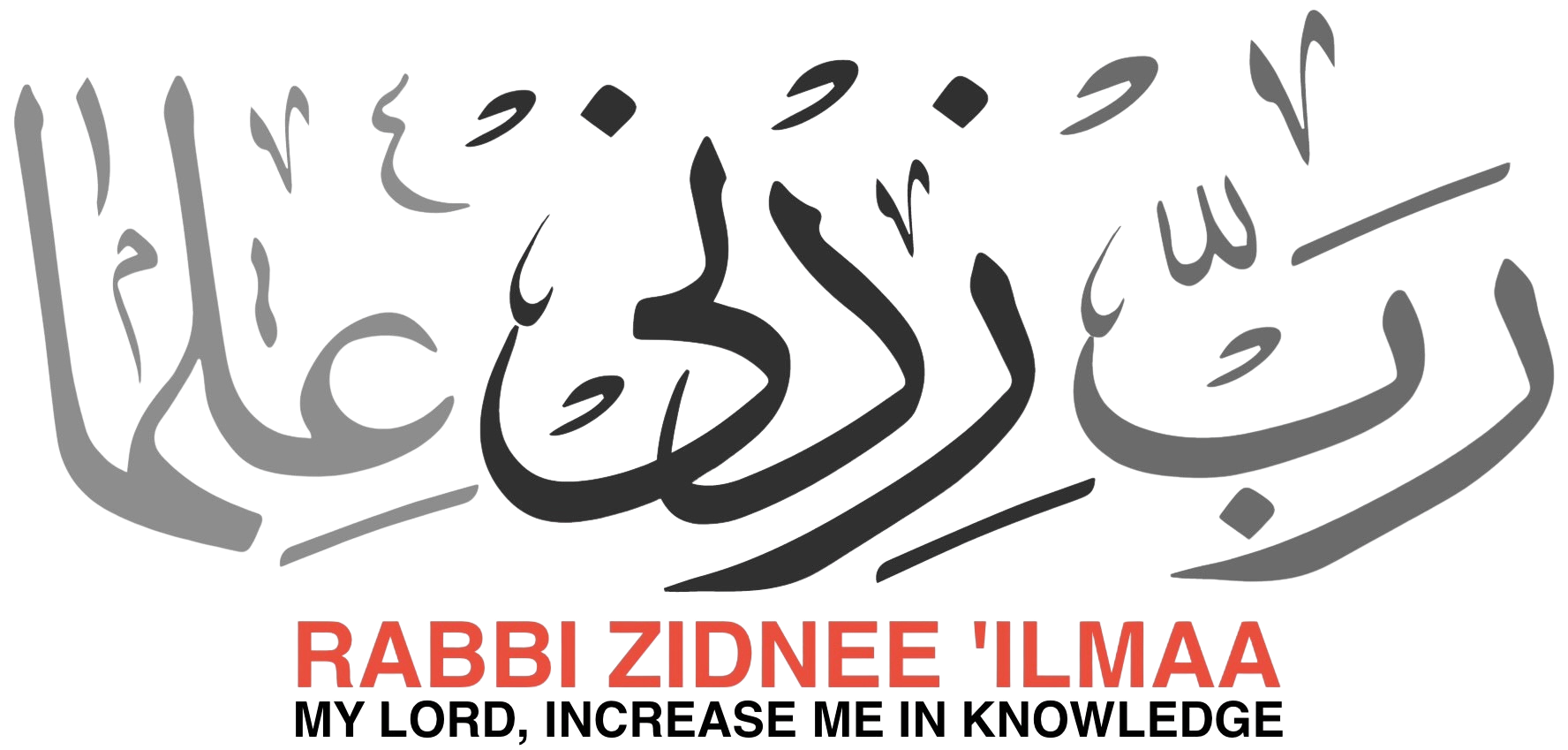
رَبِّ زِدۡنِي عِلۡمًا.
RABBI ZIDNEE ‘ILMAN.
Meaning:
My Lord! Increase me in knowledge. [The Noble Qur’an, Surah Taha, verse 20:114]
(B) (To be recited daily after the Fajr prayer)
اَللَّهُمَّ إِنِّي أَسْأَلُكَ عِلْمًا نَافِعًا، وَرِزْقًا طَيِّبًا، وَعَمَلًا مُتَقَبَّلًا.
ALLAAHUMMA INNEE AS-ALUKA ‘ILMAN NAAFI‘AN, WARIZQAN THOYYIBAN, WA‘AMALAN MUTAQABBALAN.
Meaning:
O Allah, I ask You for beneficial knowledge, wholesome sustenance, and deeds which are accepted. [Sunan Ibn Majah (925)]
(C)
اَللَّهُمَّ انْفَعْنِي بِمَا عَلَّمْتَنِي، وَعَلِّمْنِي مَا يَنْفَعُنِي، وَزِدْنِي عِلْمًا.
ALLAAHUMMA INFA’NEE BIMAA ‘ALLAMTANEE, WA‘ALLIMNEE MAA YANFA‘UNEE, WAZIDNEE ‘ILMAN.
Meaning:
O Allah, benefit me with what you have taught me, teach me what will benefit me, and increase me in knowledge. [Jami’ at-Tirmidhi (3599)]
The cure to ignorance is seeking beneficial knowledge and acting upon it. Whenever we are in doubt about a piece of information, we must verify its source to ensure it is in accordance with the teachings of Al-Qur’an and As-Sunnah. Know that the Truth will always prevail over falsehood.
(3) Understand Islam the Way of As-Salafus-Salih
Be mindful of whom you choose to follow. Do not just follow any scholar to guide you when seeking knowledge. Read or refer to books authored by those who follow the Manhaj (methodology or doctrine) of the Salaf and learn from these scholars. There is only one way in understanding and practising Islam and every Muslim are commanded to adopt it; that is the way of the Salaf. It is not a sect, as some in our Ummah label “Salafi” or “Wahhabi”, but rather the Manhaj that sculpts our understanding and practices; corresponding with the Prophet’s ﷺ, his Companions, and the two generations that came after them. Prophet Muhammad ﷺ said:
“The best people are those living in my generation, and then those who will follow them, and then those who will follow the latter. Then there will come some people who will bear witness before taking oaths, and take oaths before bearing witness.” [Sahih al-Bukhari (3651)]
“Verily, he among you who lives long will see great controversy, so you must keep to my Sunnah and to the Sunnah of the Khulafa ar-Rashideen al-Mahdiyyeen (the rightly guided caliphs). Cling to it stubbornly (literally: with your molar teeth). Beware of newly invented matters (in the religion), for verily every bid‘ah (innovation) is misguidance.” [Sunan Abi Dawud (4607)]
“What befell the Children of Israel will befall my Ummah, step by step, such that if there was one who had intercourse with his mother in the open, then there would be someone from my Ummah who would do that. Indeed, the Children of Israel will split into seventy-two sects, and my Ummah will split into seventy-three sects. All of them are in the Fire except one sect.” He was asked: “And which (sect) is it O Messenger of Allah?” The Prophet ﷺ replied: “What I and my Companions are upon.” [Jami’ at-Tirmidhi (2641)]
If we truly love Prophet Muhammad ﷺ, then we should follow his Sunnah by reading and learning as many of his hadiths as we can, and putting them into practice. We must not adopt practices that have no basis in Al-Qur’an and As-Sunnah. Prophet Muhammad ﷺ said:
“I have left you with two things and you will never go astray as long as you hold on to them: the Book of Allah (Al-Qur’an) and Sunnah of His Prophet (As-Sunnah of Prophet Muhammad ﷺ).” [Muwatta’ Malik]
May Allah guide us to adhere strictly to Al-Qur’an and As-Sunnah, to study them much as possible, and to avoid all practices that have no basis in the teachings of our Prophet Muhammad ﷺ. May He protect us from being influenced by the Ahlul-Bid‘ah (the innovators) that are prevalent in our Ummah. May Allah increase us in beneficial knowledge, grant us enthusiasm in seeking it, and bestow upon us the true understanding of the pure teachings of Prophet Muhammad ﷺ. Aameen.

Leave a Reply